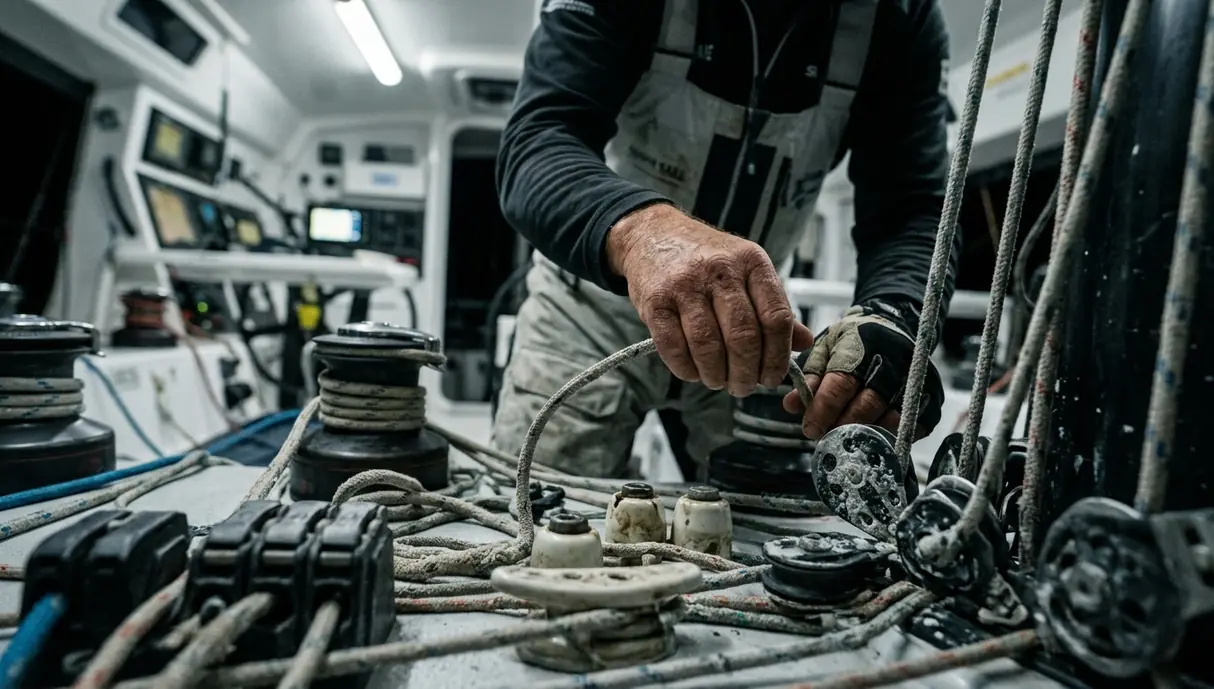
The Evolution of Sleep as Tactical Currency in Westbound Crossings
The archive of modern westbound solo transatlantic competition begins with its emergence in 1960, tracking a lineage where endurance decided who could keep a yacht driving hard against prevailing systems. Once fully crewed watches disappeared from these campaigns, sleep itself became a tactical resource. Skippers had to budget every period below deck against mandatory steering checks, weather reception, sail handling, and collision watch. The 2008 Artemis Transat provides the documented turning point for treating rest as a measurable component of race craft in the IMOCA and Class 40 fleets.
Racing from Plymouth toward Boston over a nominal 2,982 nautical miles, the fleet departed on 11 May 2008. The first IMOCA arrivals occurred on 23 May, establishing a leading passage span of 12 days and 11 hours. The Class 40 leaders followed on 28 May, stopping the clock at 16 days and 22 hours. Editors reviewing this specific archive classify rest as a tactical tool only when a skipper's communication explicitly links time below to a subsequent maneuver. A nap mentioned in passing holds little analytical value. A stated two-hour bunk interval followed immediately by a reefing operation demonstrates sleep deployed as preparation for physical output.
Reconstructing Bunk Intervals from the 2008 Position Traces
Thirteen IMOCA boats and eleven Class 40 boats started from Plymouth on that May departure date. The leading IMOCA passage concluded in exactly 12 days, 11 hours, 15 minutes, and 35 seconds. The leading Class 40 passage required 16 days, 22 hours, 11 minutes, and 27 seconds. That represents an additional 4 days, 10 hours, 55 minutes, and 52 seconds at sea for the first finisher in the smaller class. IMOCA skippers and Class 40 skippers faced the exact same Atlantic weather systems. Their different boat speeds fundamentally changed how often a rest period had to be broken for a sail or course change.
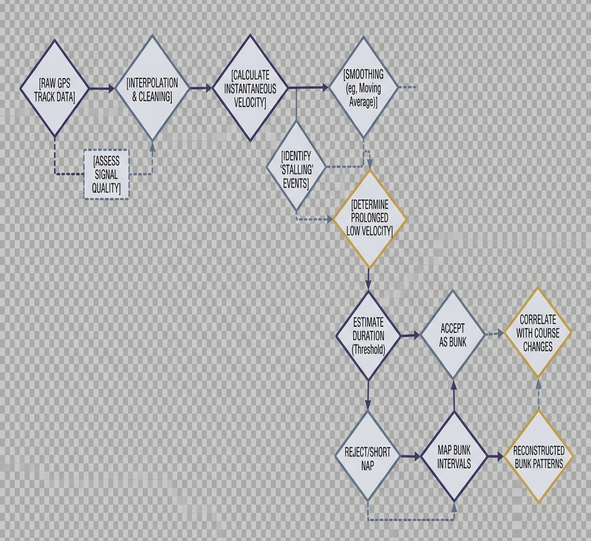
Reported rest on the solo boats clustered in short, snatched periods rather than long unbroken sleep. This became especially pronounced once trade winds and depression systems stacked across the mid-Atlantic. Race historians reconstruct these cycles by placing timestamped skipper messages beside successive position fixes. They mark explicit references to bunks, naps, alarms, or prolonged deck work, and then inspect the next recorded heading or speed change.
Class 40 Exposure Variables
The record remains strictly qualitative, built from operational logs rather than medical telemetry. Analysts leave unreported intervals blank rather than converting silence into assumed sleep. Class comparisons rely entirely on elapsed exposure, maneuver frequency visible in the track, and the skipper's own wording regarding their physical state. The extra four days on the water for the Class 40 fleet compounded the physical deficit, forcing those skippers to manage a deeper level of accumulated fatigue during the final approach to the North American coast.
Aligning Deck Checks with the Six-Hour Forecast Cycle
Skippers who maintained a repeating on-deck and below-deck rhythm could meet a weather front with sails already set. Those with broken routines often discovered the shift half-asleep, scrambling to depower the boat as the wind spiked. The comparison uses reports and track points from the 11–28 May 2008 passage period. Each maneuver is bracketed by the last pre-change fix and the first post-change fix available in the archive.
Editorial practice recognizes a watch routine only after repeated reports describe a comparable sequence. This typically involves an alarm, an autopilot check, a deck inspection, and another period below. Weather decisions align with the standard 00:00, 06:00, 12:00, and 18:00 UTC forecast cycles when the corresponding communication identifies the file or forecast time used. A reef, gybe, or marked heading alteration after that bracket serves as the execution point. Silence from below decks remains an evidentiary void, offering no data on whether the skipper was resting, repairing gear, or simply offline.
The six-hour GRIB file rhythm dictates the solo sailor's life. Downloading the weather, analyzing the routing software, and making a tactical decision consumes valuable time. Fitting adequate rest between these mandatory navigational appointments requires strict discipline. When a depression's usable window is only hours wide, broken routines show up as late reefing, delayed gybes, and autopilot neglect.
Navigational Hesitation Under Accumulated Sleep Debt
Navigational choices under sleep debt tended toward the last plan that still felt familiar. A new GRIB file might argue for a gybe or a dip south, but executing that change required physical reserves. Critical weather windows punished hesitation severely. A skipper who postponed a sail change to protect a rest period often paid later in extra miles sailed or a blown spinnaker.
For each claimed broken night, the review first records the skipper's stated plan, then the next forecast reference, and finally the executed track. A northward hold, a gybe, or a dip south qualifies as a decision only when the position trace confirms it. Analysts require a communication describing postponement, uncertainty, repeated sail work, or a missed weather routing window to identify hesitation, rather than relying on a curved track alone.
North-about caution and a more direct great-circle push are compared only at common UTC position times during the May passage, preserving the exact order of forecast receipt, stated intention, and actual heading change.
A routing reassessment could occur between consecutive six-hour forecast cycles. A delayed reef or gybe remained visible operationally through the next heading, speed, and sail-status report. The archive indicates that skippers operating on severe sleep deficits frequently chose the course requiring the fewest immediate sail changes, prioritizing short-term physical preservation over long-term optimal routing.
Executing the Plymouth-to-Boston Reef–Rest–GRIB Sequence
Consistent performers protected a minimum rest even when boatspeed begged for another sail change. They used that rest to execute the next routing move cleanly. A skipper is recorded as holding a pattern when an explicit rest interval is followed by the planned deck check or maneuver within the next observable reporting bracket. Skippers who faltered stacked small delays until a single front passed them with the wrong sail up and no clear next heading.
A breakdown requires a documented sequence: deferred action, another interruption or delay, and then a front or wind shift arriving before the intended sail or course change. The review window extends from the 11 May start through the leading Class 40 finish on 28 May 2008. This allows the two classes' different exposure lengths to remain visible across the entire Atlantic crossing.
Evidence fields are limited to specific, verifiable data points:
- Communication timestamps from the boat
- Stated rest or watch claims in official logs
- Position fixes from the race tracker
- Heading and speed changes
- Reported sail configurations
- Referenced weather forecast times
These records can establish chronology and correlation, but they cannot measure sleep depth, diagnose clinical fatigue, or produce a defensible fleet-wide sleep ranking. Isolated low speed, one poor position, or retirement from the race does not automatically indicate a sleep deficit. The focus remains entirely on the intersection of stated rest and executed maneuvers.
Approaching the 200-Metre Contour at Dawn
Close on one grey dawn west of the Grand Banks, during the final 48 hours of a Class 40 approach toward Boston. The continental shelf announces itself at the 200-metre depth contour, where the ocean floor rises sharply and alters the sea state. A skipper comes off a claimed two-hour bunk rest, moving stiffly in foul weather gear. The hatch opens to a cold, damp cockpit.
The autopilot and heading are checked immediately against the compass. The wind has backed during the brief sleep cycle. The next move requires a gybe before the shorter, steeper shelf seas stand up and complicate the maneuver. Holding the current course looks restful but costs the weather window entirely. The skipper clips on, inspects the reefed mainsail and running rigging, and releases the runner. The gybe is made while there is still enough alertness left to sheet home cleanly, securing the new tack just as the depth sounder registers the rising shelf.