
The 2008 Plymouth Pontoons and a Four-Year-Old Fleet
The singlehanded fleet left Plymouth on 11 May 2008, pointing toward a Boston approach off Marblehead roughly 2,800 nautical miles away. This westbound North Atlantic course traces its lineage directly to the original 1960 solo contest. The 2008 Artemis Transat followed that tradition, shaped by the old Observer race rather than by modern fully crewed round-the-world machinery. Contemporary entry records place Class 40 and IMOCA on the same Plymouth start.
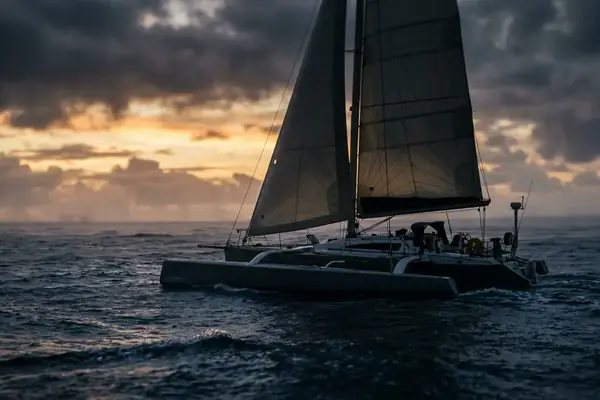
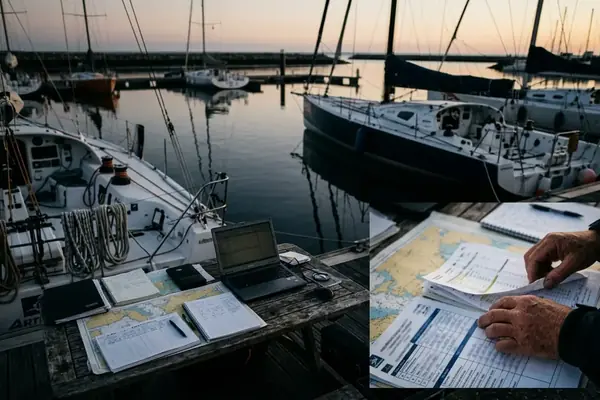
The 18.28-metre IMOCA fleet arrived as the apex of custom offshore development. Beside them sat the Class 40 division. Established in 2004, this production-derived class had existed for only four years. Skippers reached a historic start line without funding a 60-foot development programme. The class’s youth was evident on the start line. The young production class stood beside IMOCA on the same Plymouth pontoons, marking a shift in offshore fleet composition.
Measurement Limits and the 12.19-Metre Box Rule
The founders of Class 40 pursued accessibility through measurable limits rather than identical boats. The 2008-era envelope capped maximum hull length at 12.19 metres, beam at 4.50 metres, draft at 3.00 metres, and mast height at 19 metres. A minimum displacement of 4,500 kilograms anchored the fleet. Designers retained room to shape different hulls inside this envelope, allowing for varied approaches to volume distribution and deck layout. The rule mandated fixed keels and controlled construction choices, eliminating the exotic materials that drive up build costs.
The contemporary IMOCA rule permitted broad development in hull form, canting-keel systems, and rigs. Each new foil, mast, and weather cell widened the cheque-book gap between neighbours on the same ranking. Cost claims here stop at features demonstrable from the 2008 measurement rule and race documentation; unaudited campaign spending and unrecorded sponsor arrangements cannot support exact budget comparisons. The measurement ceiling ensured that production-derived boats and custom builds could enter the same measured division.
Affordability was the primary mechanism that filled the 2008 Class 40 pontoon with skippers who could start. The box rule created a cost-and-measurement ceiling that made a production hull campaignable.
Tracking the Pack Across the North Atlantic
A tracker replay from 11 May through late May 2008 reveals the character of the competition. Reading the archive in successive timestamped frames shows persistent clusters, crossings, and repeated place changes. The 12.19-metre length ceiling and 4,500-kilogram minimum displacement limited the scale of speed differences. Hull shapes and sail inventories varied, yet the fleet remained in tight tactical contact long after IMOCA leaders had stretched the ocean into a private match.

The first IMOCA completed the crossing in 12 days, 11 hours, 15 minutes, and 35 seconds. The first Class 40 required 16 days, 22 hours, 11 minutes, and 27 seconds. Those elapsed times establish distinct performance bands. The Class 40 race is better measured through along-course and lateral separation data. When two boats converge after three days on opposite tacks, it shows how closely the box rule kept them matched.
Analytical Takeaway: Evaluating Tactical Proximity
Contemporary skipper dispatches explain changes associated with sail selection, rest, damage, or routing. The box-rule format generated authentic competition. Places changed on sail choice, sleep, and routing. The 2008 edition operated as two races on one course—a development corridor for IMOCA and a pack race for Class 40. The tracker traces preserved multi-boat tactical contests across substantial parts of the crossing.
Gulf Stream Tactics and Westbound Depressions
The fleet sailed westward across a basin dominated by moving depressions and prevailing westerly airflow. Upwind sail changes, reefing, and recovery between manoeuvres became recurring operational concerns. A westbound boat meeting these westerlies loses ground through poor timing during a tack. The Gulf Stream encountered near the western side of the course added strong current and steep-sea risks. A 4,500-kilogram hull meeting a steep head sea requires precise helm management to maintain momentum.
Historians reviewing the race must compare clustered changes of heading with dated skipper reports before attributing them to a shared tactical decision. A sudden drop in boat speed often indicates a reefing evolution rather than a wind hole. Class 40 skippers worked from polars bounded by the same rule envelope. Fixed keels prevented the division from reproducing the larger canting-keel development differences seen among the IMOCAs.
The operational reading starts with each archived position report. It marks whether a boat tacked, held its lane, or separated from the group. Repeated tacks receive particular attention. The westbound North Atlantic acted as an equaliser. Headwinds, Gulf Stream meanders, and depressions punish overpowered development boats as readily as they test a production Class 40. The box rule prevented one hull from leaping a generation ahead mid-ocean and kept the fleet compressed. A practical reading method for historians involves comparing Class 40 position reports for clustered gybes against the IMOCA corridor’s growing gaps.
Redefining the 2008 Transat Narrative
The 2008 start came 48 years after the first solo westbound race on this lineage. The Class 40 division brought a four-year-old class to that historic course. The measurement limits kept competitors within a recognisable performance band. Archived tracker traces show multi-boat tactical contests across substantial parts of the crossing. The closest racing remained in the Class 40 pack.
The 11-to-late-May Plymouth-to-Marblehead boundary separated Class 40 tactical density from overall IMOCA line honours. The two winning elapsed times show why the divisions must be assessed separately. Prestige and authenticity operated differently on the Plymouth–Boston track. The box rule and the price of entry produced neighbours instead of dynasties. The boats that stole the 2008 Transat’s closest racing were a four-year-old production class lining up on a course older than most of their skippers’ offshore careers. The first Class 40 crossed the finish line in exactly 16 days, 22 hours, 11 minutes, and 27 seconds.