Pre-Race Context and Fleet Setup
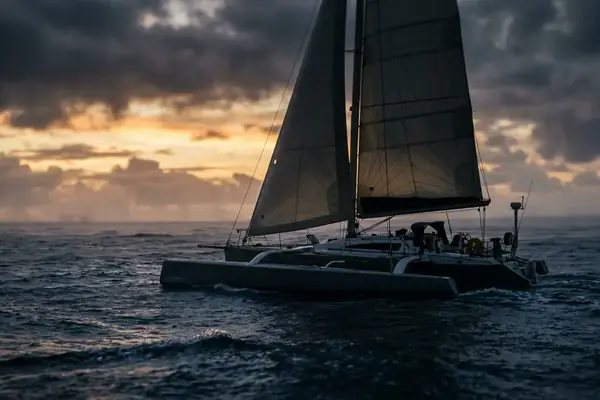
The Artemis Transat stands as a defining solo offshore challenge, pitting elite IMOCA 60 and Class 40 yachts against the North Atlantic from Plymouth to Boston. The solo fleet left Plymouth on 11 May 2008 for a westbound course of roughly 2,800 nautical miles. The entry list was split between 60-foot open monohulls and 40-foot Class 40 monohulls, with Michel Desjoyeaux competing in the 60-foot division.
His campaign started from a conservative but performance-led premise.
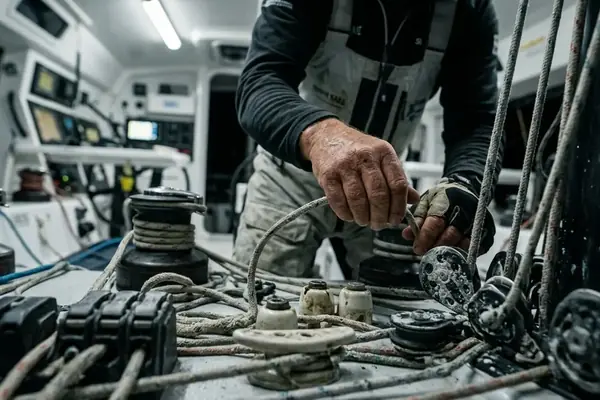
Desjoyeaux entered the race with a boat prepared specifically for repeated North Atlantic head-sea loading rather than tropical reaching. The pre-start preparation window ran through spring 2008, focusing the technical refit entirely on cold-water, upwind transatlantic conditions. He brought direct experience with long periods of single-handed sail changes, pilot management, and damage limitation, stemming from his 2000-01 solo non-stop round-the-world victory.
Critical Tactical Decisions Mid-Atlantic
Mid-race decisions were made weather system by weather system, not as a single gamble. Desjoyeaux used routing software, barometer trends, sea state observations, and direct boat feedback to decide when to keep pressure on the lead and when to throttle back.
Important: This reading applies specifically to the May 2008 westbound North Atlantic pattern; it should not be copied directly to a downwind trade-wind crossing or to a crewed race where human trimming capacity fundamentally changes the risk calculation.
The key tactical phase fell between 14 May and 21 May 2008. Successive North Atlantic depressions created repeated transitions between strong upwind sailing, frontal passages, and lighter post-front sectors. Operational choices centered on reefing the mainsail before the strongest squalls hit and changing down from larger headsails as the apparent wind built. The primary objective was to re-accelerate quickly after each front passed.
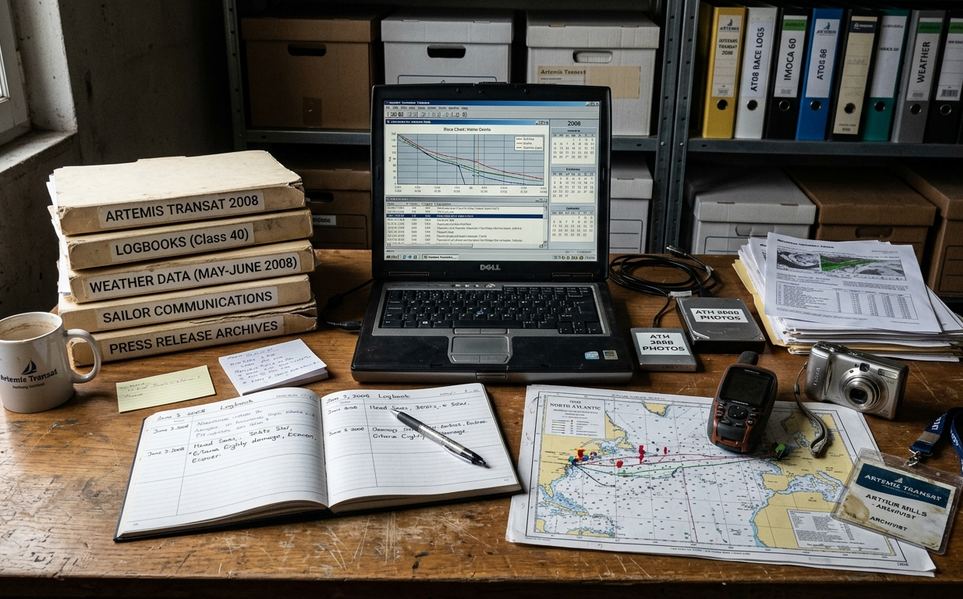
The tactical problem extended well beyond wind direction. Steep head seas on the westbound route made boat speed, slamming risk, and autopilot load part of the exact same decision matrix. Weather-file updates and onboard observations were used in cycles of several hours. Sail plan and heading decisions were revised repeatedly rather than locked in for a full day.
Notable Boat and Solo Performance Elements
The performance gain came from keeping the 60-footer close to its sustainable target speed while avoiding the kind of over-pressing that ends a solo race through gear failure. Describing this win as simply a faster boat story misses the central risk. A powerful 60-footer driven too hard through May North Atlantic lows could easily lose the race through sail damage, pilot overload, or structural fatigue.
Resource Management and Autopilot Load
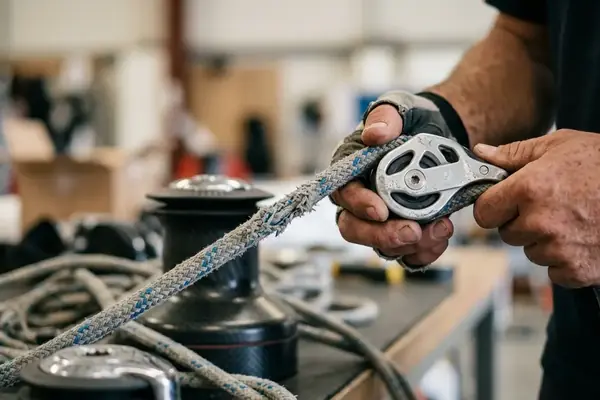
The highest-load operating period for the boat and skipper was the middle week of the race, approximately 14-21 May 2008. Sail reductions and re-hoists had to be managed entirely without crew assistance in highly volatile conditions. Solo resource management depended on short rest blocks tied to alarms, sail checks, weather updates, and pilot performance rather than a normal overnight sleep period.
The boat’s 60-foot open-monohull configuration allowed high sustained speed. That same power increased the consequences of poor trim, excessive heel, or late reefing in head seas. Community observation suggests that managing this delicate balance between speed and structural preservation separates finishing campaigns from dismastings.
Race Conclusion and Strategic Impact
The finish validated a strategy built on disciplined pressure rather than all-out speed. Desjoyeaux completed the Plymouth-to-Boston course in an official time of 12 days, 11 hours, 45 minutes, and 35 seconds. His arrival fell in the Boston evening window on 23 May 2008.
The official elapsed time implies a made-good average near 9 knots before allowing for the extra miles actually sailed to navigate the weather systems. The result was a definitive line-honours and class-winning finish in the 60-foot solo monohull division.
Field Note: The same reef-early, protect-the-boat logic carries different weight in a crewed format, because extra hands can trim continuously, rotate watches, and complete sail changes faster than a solo skipper.
Bottom Line: The campaign’s practical after-effect was to reinforce a proven template used in later solo ocean racing. The method is clear—preserve the boat through the worst frontal conditions, then exploit acceleration windows immediately after the system passes.