Criteria for Selection
The Artemis Transat stands as a defining solo offshore challenge, pitting elite IMOCA 60 and Class 40 yachts against the North Atlantic from Plymouth to Boston. Establishing a functional departure point requires a rigorous evaluation of maritime facilities. Planners base selection logic on the race-operating requirement rather than visitor appeal. The harbour must allow alongside access for offshore racing yachts, shore-team movement, and controlled spectator access.
Fleet accommodation must distinguish between 60-foot IMOCA monohulls and 40-foot Class 40 boats. Berth length, shore-power reach, sail handling space, and pontoon loading differ significantly by class. Planners use the 11 May 2008 start as the fixed planning anchor. Venue-readiness decisions lock before the final pre-start operating window of 10-11 May 2008.
This logistical framework assumes an alongside harbour start with public-facing shore activity; applying these principles to dispersed moorings or private yacht-club berths requires fundamentally different access control models.
1. Harbour Infrastructure Readiness
Spatial morphology dictates operational viability. Harbour masters sequence readiness decisions from boat safety outward. They assign race berths first, preserve emergency and turning water next, and finally position technical sheds, sail storage, and security lines.
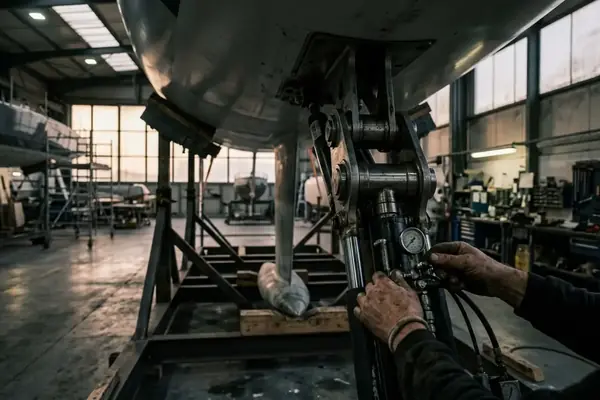
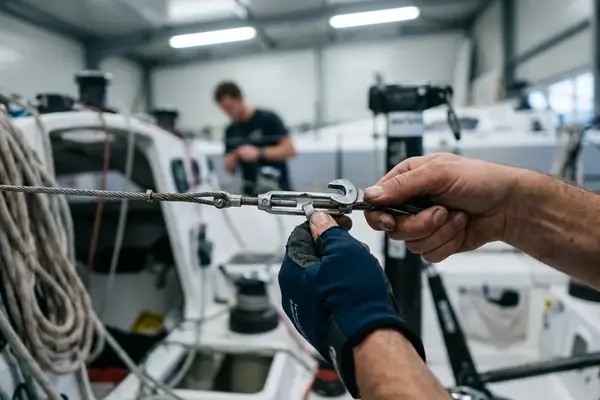
Dedicated berthing zones separate competing yachts from visiting craft. Pontoon access remains strictly controlled for skippers, shore crews, race officials, technical contractors, and accredited media. On-site technical support requires dry, secure space for sails, tools, spare running rigging, electronics cases, and safety equipment during the final start-week window of 5-11 May 2008.
Field Note: Copying this spatial plan to a harbour without sufficient alongside berthing breaks the technical workflow. Offshore racing teams require direct pontoon access for sails, rigging, electronics, food, and safety gear in the final pre-start period.
2. Partner Contributions to Setup
Executing a transatlantic departure demands precise division of labor based on operational capability. The commercial title backer—Mumm Champagne, handles hospitality and branded guest logistics. The harbour operator, Sutton Harbour Group, manages pontoons, access control, and marine safety. A regional development agency provides funding through a multi-phase civic integration grant.
Site managers keep hospitality deliveries separate from technical race traffic. Catering, guest reception, and sponsor materials must not compete with sail repairs, safety inspections, or shore-team loading. Funding, access permissions, temporary structures, and contractor schedules require confirmation before the main build period immediately preceding the 11 May 2008 departure.
3. Timeline and Race Village Configuration
Race village construction follows a backward planning method originating from the 11 May 2008 start. Organizers protect the departure corridor and safety perimeter before placing media facilities with clear sightlines and communications access. They position public zones last.
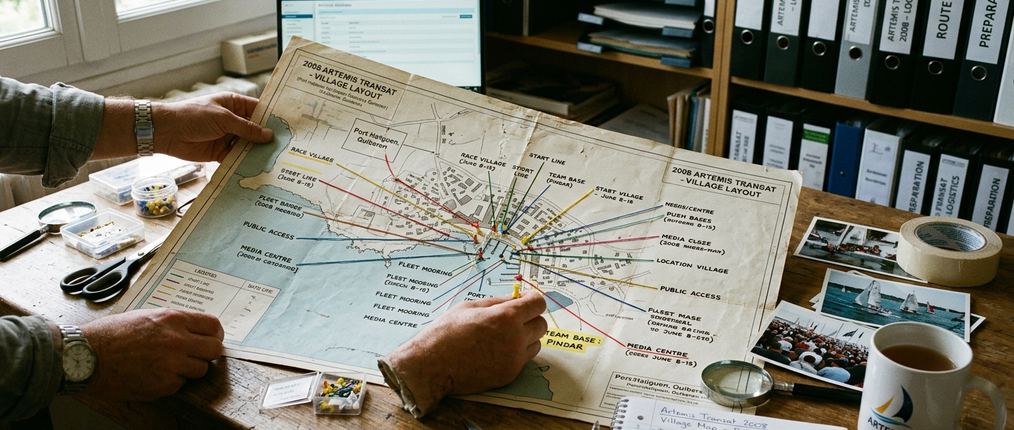
Public access zones remain physically separated from race-team pontoons. Controlled crossing points exist only where officials can prevent interference with shore-team work. The final 24-hour operating period, 10-11 May 2008, prioritizes media accreditation, skipper access, safety checks, public barriers, and clear routes for emergency services.
4. Operational Considerations
Governance of the departure site relies on a single harbour coordination structure. This central authority brings together race management, marine operations, security, media, contractors, public-access staff, and local authorities.
Weather contingency planning focuses on the 72-hour pre-start window from 8-11 May 2008. Wind, visibility, sea state, and safe fleet movement affect both the start sequence and spectator management. Post-start dismantling begins only after competing yachts, escort craft, media boats, and official vessels have cleared the harbour operating area. Crews remove temporary barriers, signage, hospitality units, waste, and technical storage in a controlled sequence.
Important: Community observation suggests that the balance of berths, storage, media space, and public access changes fundamentally if the fleet mix shifts away from 60-foot IMOCA and 40-foot Class 40 boats.
Bottom Line: Operational control relies on strict sequencing, ensuring that technical readiness precedes public engagement.