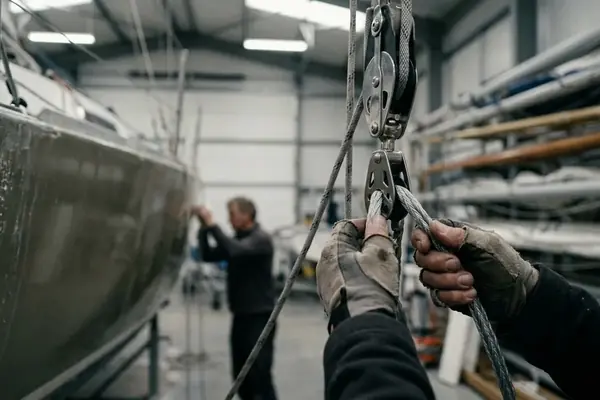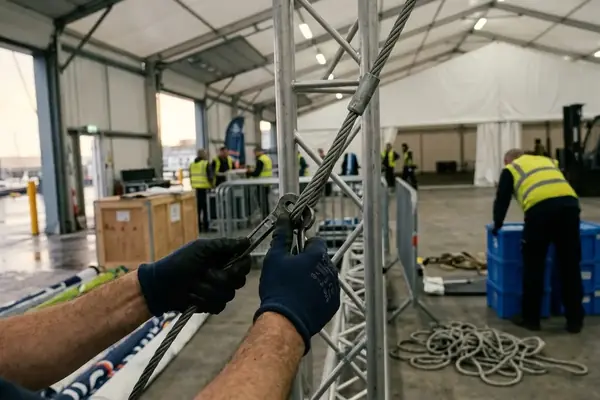
The Class 40 framework operates on a strict measurement philosophy. Rather than dictating a single one-design hull, the class relies on a defined set of physical parameters. A boat can originate from different designers or builders, but it must pass identical certificate checks after launch. Tracking how these parameters shifted reveals how offshore yacht design adapts to regulatory boundaries.
Foundations of Class 40 Rules Established in 2008
The 2008 framework established the class as a measured box rule. Core dimensional controls used a strict 40-foot monohull box. The absolute limits were set at a maximum hull length of 12.19 meters, a maximum beam of 4.50 meters, and a maximum draft of 3.00 meters. These three figures formed the unyielding physical boundaries for naval architects.
Measurement protocols during the 2008 season focused entirely on completed-boat checks. Displacement was not accepted from drawings alone. Boats were weighed in a defined measurement condition, with the class minimum commonly cited at 4,500 kg for the period relevant to 2008 certificates. The certification process required physical verification of hull measurement, appendage draft, rig-height control, and displacement before any offshore entry paperwork could be finalized.
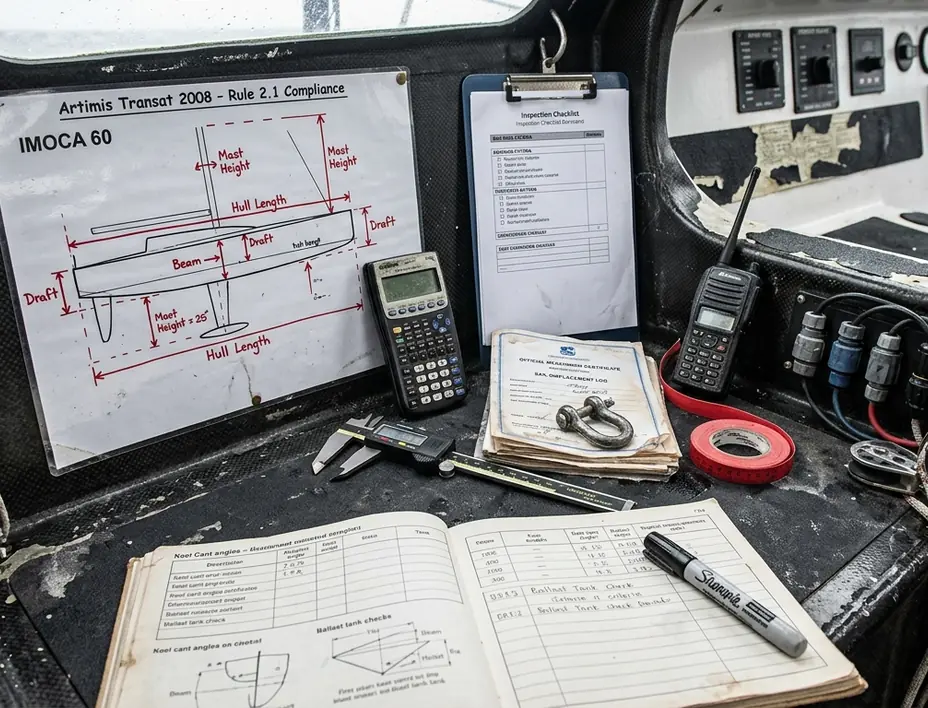
Field Note: Using brochure displacement, advertised sail area, or designer renderings as evidence of a yacht's performance potential is unreliable. The defensible comparison point is always the measured certificate condition.
Key Amendments to Production Specifications Over Time
Rule changes after 2008 materialized as edition-by-edition amendments rather than a single redesign of the class. The usual sequence involved a measurement ambiguity or design development appearing in the fleet, followed by a targeted regulatory update. You can trace these specific textual shifts through the official Class 40 class rules archive.
The 2009–2018 Cycles
Across the 2009 to 2013 rule cycle, the stable outer box remained the primary reference point. The 12.19 m length, 4.50 m beam, and 3.00 m draft continued to limit the largest performance levers available to designers. During the subsequent 2014 to 2018 cycle, amendments increasingly targeted definitions around rigs, appendages, structural declarations, and safety equipment rather than altering the basic 40-foot size envelope.
The 2019–2024 Shift
In the 2019 to 2024 cycle, rule attention shifted toward the consequences of very full bow sections. The regulatory focus expanded to cover cockpit protection, watertight integrity, and escape access. Committees also formalized how modern offshore electronics and emergency equipment are documented for compliance. The outer dimensions remained static, but the internal and volumetric constraints grew highly specific.
Side-by-Side Comparison of Rule Impacts on Yacht Design
Design offices responded to each rule edition by spending the fixed allowances differently. Once length, beam, and draft sat at or near the caps, performance gains came from hull volume distribution and righting moment optimization.
A typical 2008-compliant design features narrow-to-moderate forward sections and a fixed keel within the 3.00 m draft limit, with displacement measured against the 4,500 kg floor. Later-generation boats built within the 2019-2024 rules often show fuller forward sections, broader working decks, and more protected cockpit layouts. They demonstrate greater attention to watertight subdivision while remaining inside the exact same length and beam caps.

The practical performance difference is most visible in reaching and heavy-air offshore conditions. Newer hulls carry power differently, but they do not receive extra certified length or draft beyond the original box limits.
Important: Certificate-era comparisons are valid only when the boat’s actual measurement file, modification history, and carried equipment state are known. Two hulls from the same launch year can rate differently if one has later structural, rig, or safety updates.
Regulatory Impact Summary
| Rule area | 2008 baseline | Later rule-evolution effect | Design consequence |
|---|---|---|---|
| Hull size | Maximum length 12.19 m; maximum beam 4.50 m | Outer box retained through later editions | Volume shifted to forward sections within the same caps |
Observable Effects on the Class 40 Fleet
The fleet outcome was not a clean break between old and new boats. Rule makers preserved eligibility for compliant older hulls while tightening definitions for new construction and major refits. This approach stabilized fleet numbers and protected the secondary market for older yachts.
A 2008-era boat that still meets hull, displacement, draft, rig, and safety certificate requirements can remain class-compliant after inspection. Obsolescence in this fleet is competitive, not automatically regulatory. From 2008 to 2024, the measurable continuity is the retained outer box. The 12.19 m length, 4.50 m beam, and 3.00 m draft stayed central to comparing fleet generations.
Safety alignment over the same period became highly operational. Offshore inspections increasingly emphasized watertight closures, emergency access, communications equipment, liferaft stowage, and storm-sail readiness. The class moved away from relying solely on dimensional checks, demanding documented compliance for all emergency systems.
Bottom Line: Treating every post-2008 boat as faster because of the rule date alone is wrong. A poorly maintained newer hull can be less competitive than a well-prepared older one that still measures cleanly.