What an Analyst Loses by Reading the 2008 Class 40 Split Through Hull Shape Alone
An observer who files the 2008 Class 40 fleet split under hull geometry alone loses the operational record of which single-handed systems held a sailing angle on the westbound track from the Plymouth start on 11 May 2008 to the Boston finish. Unlike the IMOCA 60 fleet with its canting keels and deep appendages, the Class 40 rule fixed the keel on the centreline and forced the boat to rely on deck systems, water transfer, and sail-handling sequences to manage load. When an evaluation treats hull form as the singular driver of race results, critical variables disappear. Ballast timing, cockpit working routes, and the sequence of sail reductions collapse into a vague assertion that the faster boats were simply inherently faster. That compression makes later comparisons across the Artemis Transat Class 40 fleet unreadable.
The operational comparison that matters on a North Atlantic crossing is how solo skippers maintained a workable sail plan through a wind increase, the squall peak, and the subsequent directional shift. Every depression along the westbound passage tested the link between three elements: where the weight sat, where the skipper stood to reef, and how the steering reference behaved while the sailor was occupied. Reading those systems in sequence restores the tactical decisions behind the position reports.
To reconstruct how miles were won or forfeited, an offshore historian must examine the mechanical chain that kept a forty-foot monohull driving to weather when the sea state deteriorated.
Fixed-Keel Righting Moment and the Timing of Windward Water
Water carried in the windward ballast tank acted as the primary mechanical lever for righting moment on a long beat or tight reach. Because the keel remained fixed, shifting water weight to weather allowed the yacht to carry working sail without requiring the skipper to hike on the rail. On the westbound North Atlantic track, the operational value of those tanks depended entirely on when the valves were opened relative to the approaching breeze.
Pumping water to weather before a sustained wind increase supported the existing sail plan as the aerodynamic load rose. The added righting moment kept the hull upright, preserved rudder grip, and held the boat on its sailing angle without forcing an immediate trip to the halyards. If the skipper waited until the yacht was already overpowered and heeling heavily, the transfer occurred while the hull was stalling sideways and the helm was loaded.
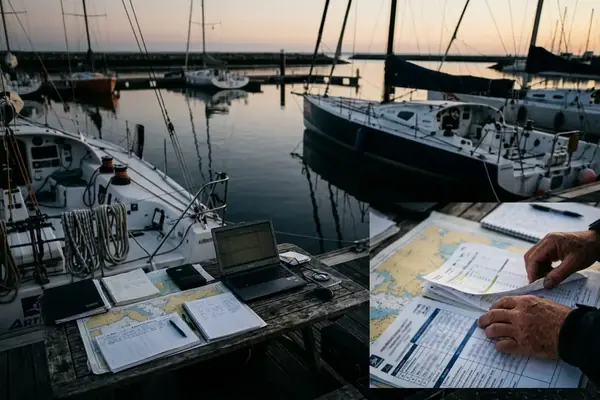
When reviewing race logs and skipper statements, the operational window to examine runs from the first recorded sustained wind increase to the next reef or headsail reduction. A complete log sequence reveals the mechanics of the watch through five linked entries:
- The tack being sailed: Establishes which side of the hull is taking the load and whether a recent tack required a tank-to-tank gravity transfer or a fresh pump cycle.
- The ballast operation: Marks the exact timestamp when the windward tank was filled relative to the barometer drop or wind rise.
- Wind strength: Confirms the pressure the rig was absorbing after the tank was pressed full.
- Sail configuration: Shows whether the boat held its full working mainsail or existing reef through the initial build.
- Observations of heel or helm: Indicates whether the rudder stayed lightly loaded or began to cavitate as the puffs struck.
Log Sequence Audit: Match the ballast entry to the following wind increase before judging the sail choice. Ballast already positioned to weather changes the mechanical meaning of a mainsail left at its existing reef.
When the transfer happened ahead of the squall, the qualitative gain was straightforward: working sail stayed up longer, the boat held its upwind or tight-reaching angle, and an early, speed-killing reef was avoided.
Tracing Control Lines from the Coachroof to the Foredeck
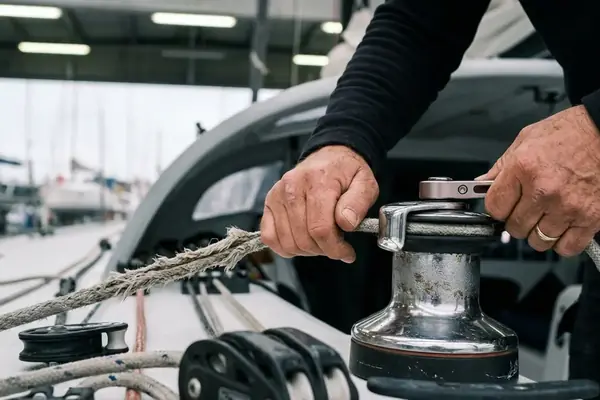
A cockpit layout that finished a sail reduction in one stop preserved the pilot-steered watch; a layout that sent the skipper to the mast during a squall interrupted that watch and exposed the boat to broaching or stalling while the crew was out of reach of the primary winches. Evaluating a 2008 Class 40 requires tracing each control line from the sail or spar back to its working position in the cockpit.
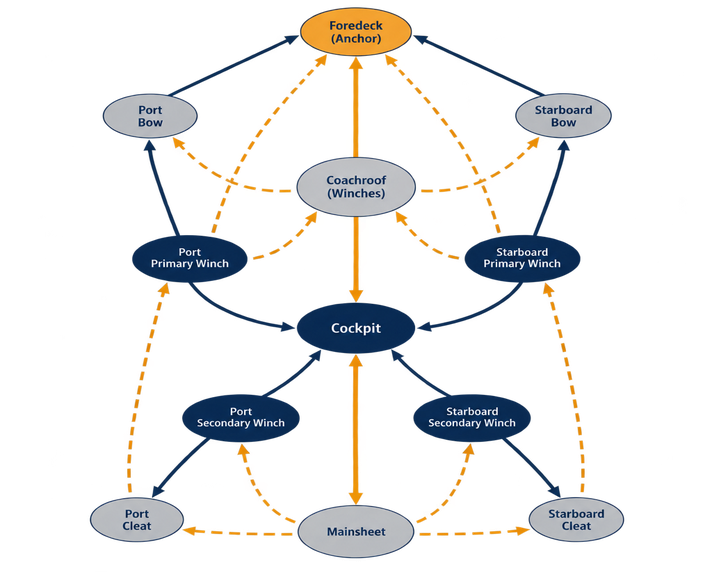
Period photographs and deck notes allow an analyst to establish how much of a reduction could be completed from under the cuddy while the autopilot steered. Photographs reveal the grouping of clutch banks on the coachroof, the proximity of primary and pit winches, and the routing of furling lines along the side decks. Deck notes clarify the physical boundaries of the system: they show whether pulling down a reef required a trip to the mast to hook a tack horn or clear a batten car, and whether a headsail swap demanded foredeck attachment and manual retrieval.
The cockpit boundary in a 2008 Class 40 photograph is the distinction between controlling a headsail's lines aft and physically attaching or recovering that sail forward. Releasing a furling line or easing a halyard from the pit is a separate job from dragging a heavy, wet sail bag across the foredeck in a building seaway. Even on boats with reefing pennants, halyards, and furlers led cleanly aft, the position of the below-deck or cockpit sail stack mattered. A single skipper had to muscle the replacement sail into position while keeping the cockpit sole clear of tangled tails.
When comparing two boats through a heavy-weather transition, trace the working positions used from the initiation of the reduction to the moment the new configuration was trimmed and the lines were coiled clear. Every step that kept the sailor aft reduced the time the boat spent sailing untended during the worst of the gust.
Working Inventory Sequence Across a North Atlantic Front
The Plymouth to Boston passage forces the fleet into long stretches of beating and tight reaching against the prevailing North Atlantic westerlies, opening a wider reaching lane only after a low-pressure depression has passed over the fleet. Reading a yacht's working sail inventory against that meteorological pattern explains why sail-handling habits mattered more than the sheer size of the wardrobe.
The working inventory split cleanly by job:
- Upwind and tight-reaching reduction: A reefed mainsail reduced the centre of effort and total area aft, while a smaller headsail or staysail placed a manageable, flatter forward triangle closer to the mast for stronger upwind conditions.
- Post-frontal expansion: A reaching sail served the eased-angle lane behind the front, pulling the bow forward once the wind swung aft of the beam and the sharpest cross-sea began to flatten.
The operational habit that separated boats in the race results was the strict order of the change. Skippers who protected their miles stepped the rig down before the squall hit, then expanded the plan promptly once the post-frontal shift settled. Having water ballast already to weather and reduction controls led to the cockpit made this sail-change sequence part of a single handling system. An analyst examining race records should compare sail entries across three distinct phases: the pre-frontal build, the peak of the strongest conditions, and the settled post-frontal wind.
Steering References and Watch Rhythm Under Autopilot
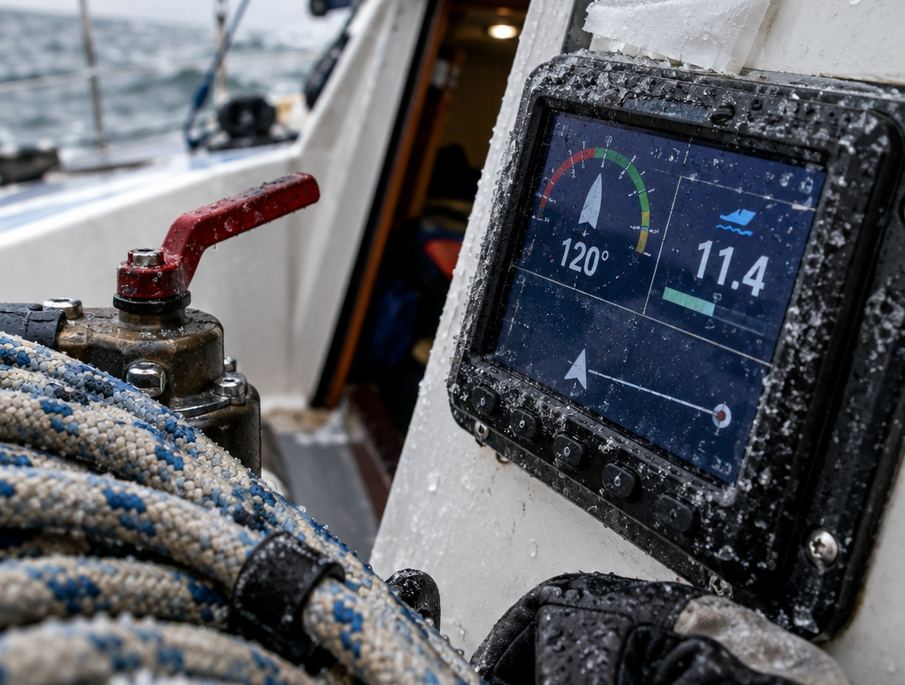
The autopilot functioned as the mechanical hand that held the boat's angle while the skipper slept, transferred ballast, or winched down a reef in the cockpit. Choosing the pilot's steering reference before stepping away from the helm dictated how the hull reacted when a frontal trough distorted the wind field.
Autopilots operated on two distinct references: compass heading and measured wind angle. Heading mode locked the boat to a fixed compass course. If a pre-frontal header arrived while the skipper was below or working at the winch, a locked compass course kept the bow pointing in the same direction as the wind swung forward, pinching the sails or bringing the boat head-to-wind. Wind-angle mode followed changes in the measured wind direction to preserve the selected sailing angle relative to the breeze.
Maintaining wind angle through a shift changed the boat's compass heading and therefore altered its geographic track across the chart, yet it kept the sails drawing cleanly and prevented the hull from stalling in the trough of a wave. When the pilot held the aerodynamic angle steady, the rig experienced fewer sudden load spikes.
The single-handed watch rhythm relied on separating heavy tasks so they did not stack into the same squall. A balanced cycle moved from a targeted deck intervention, to a check of sail trim and pilot steering behaviour, and then into a longer pilot-steered interval that allowed the skipper to rest or monitor weather routing. The qualitative gains from this discipline are visible in the steadiness of a boat's progression: a maintained sailing angle, preserved rest opportunities, and fewer urgent returns to deck to rescue an over-pressed rig.
One Front on the Westbound Track, Taken in Order
To evaluate how these systems interact on the Plymouth to Boston track, apply the Plymouth–Boston systems breakdown—windward water first, cockpit reef second, wind-angle steering through the shift, reaching sail after the front—step by step across a single depression. Applying this sequence to a particular 2008 boat requires contemporary evidence of its ballast controls, deck layout, and sail-handling arrangements.
Step 1: Pre-Frontal Build and Ballast Preparation
As the barometer falls and the breeze builds ahead of the trough, you check the tank state before touching a halyard. You open the scoop and pump water into the windward tank until it is pressed full. With the fixed keel aided by the fluid weight to weather, the hull resists the initial increase in heel, and the boat holds its close-hauled angle without losing forward drive.
Step 2: Cockpit-Controlled Sail Reduction
Before the squall peak arrives and the sea state turns steep, you step to the coachroof winches. Using the halyards, reefing pennants, and furling lines led aft to the cockpit clutch banks, you pull down a reef in the mainsail and furl the larger headsail in favour of the staysail. Because the lines terminate in the cockpit, you stay off the foredeck as the waves build, clear the working tails inside the pit, and complete the reduction in one continuous watch interval.
Step 3: Pilot Reference Check Through the Shift
With the reduced sail plan sheeted home for the beat, you set the autopilot to wind-angle mode and verify how the rudder responds to the gusts. As the front passes overhead and the wind shifts, the pilot alters the compass heading to follow the measured breeze, keeping the staysail and reefed main filled at their target angle while you remain protected aft.
Step 4: Post-Frontal Reset and Reaching Expansion
Once the squall clears and the new wind direction settles at an eased angle behind the front, you reassess the boat from the bottom up. You adjust the water ballast for the new tack and changed heel load, shift the pilot reference to match the settled reaching lane, and deploy the reaching sail to convert the steadier post-frontal breeze into direct miles toward Boston.